Werwulf: Exclusive First Look Inside Robert Eggers’ New Movie and a Career in Moonlight
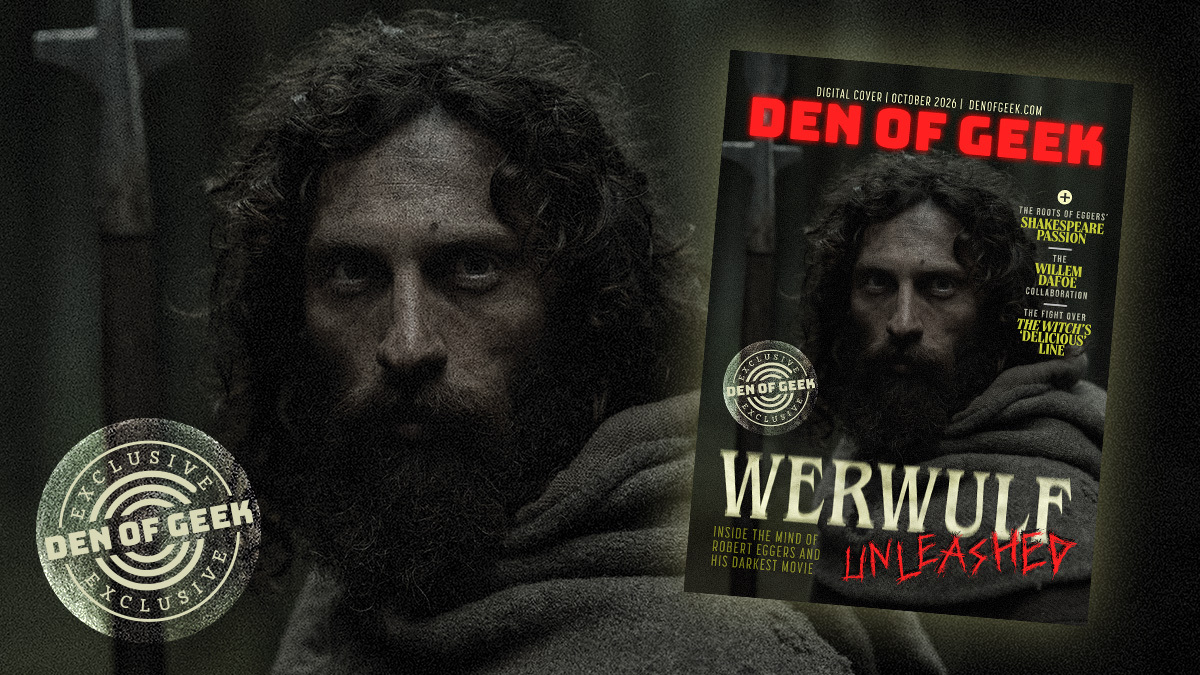
Robert Eggers is in the midst of transformation. When we catch up with the 21st-century maestro of the macabre, he is in a pitch-black room (of course) at his London studio, supervising the final mix of sound and effects for Werwulf . Like other Eggers films that are now staples of modern horror, from The Witch to Nosferatu , Werwulf is a meticulously researched, borderline fanatical period piece, this one set in a 1300s England so authentic every character speaks in Middle English. Stars Aaron Taylor-Johnson and Lily-Rose Depp even practiced each line with a phoneticist. Yet like Taylor-Johnson’s cursed hero, Eggers is still carefully watching the gory details take shape when we meet. Originally conceiving the film as a black-and-white chiller (better to obscure the bloody bits), he and constant DP Jarin Blaschke ultimately opted for an orthochromatic look that drains light from characters’ faces while maintaining a hellish, flame-lit glow. The makers are still manipulating the film grain, but the goal is to echo the shadowy nihilism of The Lighthouse without sacrificing the color in the viscera. Eggers admits medievalists might wince at a 1300s England where everyone’s covered in darkness, not to mention shit, but, he grins, “That is the world of this movie.” Below is our conversation, edited for length, about that world, the obscure werewolf lore which informs it, and a career dedicated to reviving the demons we’ve all pretended to forget. ( *Editor’s Note: This interview was conducted before Eggers’ Romeo and Juliet was announced.) You obviously grew up with a fascination with monsters, cinematic and otherwise, so was there a moment where you discovered The Wolf Man at a public library? Robert Eggers: Nosferatu had this beautiful origin story that was really easy to describe and fold in for press. This doesn’t have quite such a magical moment of discovery, but the movie werewolf that actually affected me the most was Gary Oldman’s wolfman in Bram Stoker’s Dracula . I saw him ravaging Sadie Frost on that bench, and I was way too young to see that, and it was pretty scary. Also my younger brother Max, who wrote The Lighthouse with me, when he was quite little he believed he was a werewolf, sincerely, for like six months. And I was also very afraid of werewolves at night when we lived on a dirt road in the middle of nowhere, and I had to drag our garbage cans down the bottom of this long hill to the road. I would always run back up the hill as fast as I could, because of werewolves for whatever reason. It could have been your brother. [Laughs] It could have been. What started this fascination was, similar to vampires, reading Montague Summers’ collection of historical vampire lore when I was in high school. Unlike vampires with Dracula and Salem with witches, there’s not really a single historical text or event the modern American mind associates with werewolves. You could have gone back to Ancient Greece for this or the Beast of Gévaudan. Why 14th century England? If you were trying to be the most archetypally grounded in werewolf lore, 18th century France or early modern Central Europe would probably make more sense. But you’re always trying to raise the bar and after Nosferatu , I was just sitting at my desk, thinking what’s the scariest movie I can write? I’m not saying I succeeded in this, but that was the idea, and I definitely succeeded in darkness, I’ll tell you that! [Laughs] Werewolves came into my mind because the historical werewolves, who you’ve clearly been reading up about, these Central European stories tend to be humans who are doing things that are so extreme and taboo and frightening, that the community and the magistrates can’t wrap their minds around them being human, so they’re saying you’re a werewolf. So a werewolf seems to be like the right monster for this, because that can go very, very dark. And then I live in England, so I thought it’d be great to shoot it here so my son can stay in school, but I quickly discovered there’s not a ton of British werewolf lore because there are no wolves in England. I quickly learned this is because Edward I was trying to protect the wool trade, so he hired this hunter who was a knight to exterminate all the wolves, hunt all the wolves in England. Once he began that, he did a great job and in another 200 years or so there were no wolves, and without wolves there’s no werewolf lore because you don’t have wolves to be afraid of to amplify that in your imagination. So if I was gonna make it English, it was going to have to be this early, and making it at the turn of the 14th century also made it exciting to me, because this was also going to enable it to be super dark and super scary because of the so-called primitive nature of of of the of the English culture in that period. We tend to think of the 14th century as kind of the seeds for the Renaissance, but that’s really elsewhere in Europe. Is it fair to say that England in this period is kind of a backwater? I don’t think that’s unfair. [Laughs] Certainly the French historian that we worked with would say so, but he’s French . So Willem Dafoe’s character is based on that knight/hunter, and we don’t see see his life outside of the hunt, but if you got into his psychology and in his worldview, in his strata of society, it would be more complex and along the lines of reaching towards Renaissance thought. He is a hunter in this, and he was a hunter in Nosferatu . What are the differences between that archetype with someone who is post-Enlightenment and this medieval character Willem’s playing? [ Nosferatu ’s] von Franz has mixed feelings about the Enlightenment, but he is an intellectual. He’s not Hugh Jackman, vampire hunter. He doesn’t even know if the fucking stake is gonna work. He just read all of it in books… but this guy uses his hands. He’s a skilled swordsman; he hunted for sport and prestige when he was younger for sure. The first popular werewolf narrative in England was a German account The Damnable life and Death of Stubbe Peeter . Did you look to that for this movie? That’s definitely a great source that I definitely looked at. It’s not Aaron’s character’s story, but it’s certainly among the best. Peeter was probably a serial killer and admitted to eating children. You’ve made some gruesome movies, but does this material feel gorier or more violent than you’re used to? The movie is very dark and it is very extreme, and it goes further than some of my other films. The world itself is part of what makes it so frightening… When my cinematographer Jarin read the script, he was like, ‘Does this thing take place in hell?’ And I was like, not literally or metaphorically, but it is hell for Aaron’s character. You are going to embark on a very dark journey, but if you know my films, there are a couple jump scares in here, but it’s psychological horror. Even if there’s extreme acts, and even if there is gore, that’s not what’s scary about it. And are you drawing any direct inspiration from Stubbe or just the general sense of the era? There’s some mythology in the [Stubbe] story that also coexists in this but also exists in other accounts that I found, and it is true that a lot of the details are more from the early modern period, just because the medieval English stuff is so scant and most of it is actually written by the like intelligentsia and so isn’t really folklore. So you have to kind of look to the future, rewind it, and then put it through an Anglo lens. So it’s a little funky, but I’ve had to do things like that before. One of the things I always appreciate about your movies is you remember, the world was very dark before electricity. How are you and Jarin trying to innovate with the setting on this one? It’s an evolution of the stuff that we’ve been doing. Everything that is flame is flame. Well, actually, there’s one scene with a chicken that for the safety of the chicken, is not lit by flame, but except for that one shot, everything is flame for flame. And we’re using a similar moonlight approach that we started in The Northman , and I think we greatly improved in Nosferatu . Here, I think the biggest challenge in the moonlight was ‘how do we get it to work in these forests and some of these lighting setups?’ The trees were quite large and difficult. But once upon a time when this movie was conceived, partially because of the the bleakness of the film, and partially because of the violence of the film, I thought it would be good to have it be in black and white, because black and white would express the bleakness but also obscure some of the goriness by way of not having it be in color. But it grew to a point in scope where it became clear black and white wasn’t feasible, so we said, ‘Okay, how do we make that a cool thing?’ And what was it about black and white that we were so attracted to? And part of that was this orthochromatic look which degrades the skin tones and adds the kind of detail that we did in The Lighthouse , and Jarin concocted an idea to do that in color. And furthermore to get the grain structure and microcontrast from black and white negative onto the final image. So it’s definitely a very unique look. Other returning collaborators are Aaron and Lily. Did you write these roles specifically for them? I did, yes. I know everyone always says there is no one else who could play the role or whatever, but with Aaron, there is no one else who could have played the role. With his dance background he’s able to do things athletically that I don’t think a lot of actors of his stature could do. And then he is very beautiful in a traditional masculine way, which is really appropriate for the character. He also is good at conveying a haunted quality when this man is cursed—and cannot escape his curse—so that is massive. Then getting to know Aaron behind the scenes, he is a really, really warm person, an incredible father, a devoted father. Warm in a way that when he meets my son, he’s hanging out with him. He’s not a dark person. He is not into any of the same shit I’m into. So having someone with so much light and warmth trapped in this cursed, dark hellish world, I thought was going to be very exciting. And Lily’s character is physically extremely different from Lily. Lily’s presence and her physicality is very light, airy, almost ethereal, this character is incredibly earthy, but her personality is incredibly grounded and incredibly centered and incredibly generous. So she is the center of Aaron’s world and her character is kind of like the soul of the movie, and her character is the most courageous and the strongest, and one of the few characters with grace in this totally terrible, hellish, rainy, muddy, shit-infeested world. You were comfortable with Early Modern English before The Witch in part because your father was a Shakespearean professor. Did you have a similar familiarity with Middle English before recently? No, and frankly I can write fluently in Early Modern English if anyone ever needs that! I can do it! Which is great, I suppose. But Middle English was a huge challenge. I am familiar with it, but it is more like approaching a different language. That’s really cool because you can see here’s Old English, that’s a Germanic language, and here’s the Norman influence of French [in Middle], and you see them getting smashed together and figuring it out in real-time when you read Middle English. But one of the things that also excited me about doing it in this movie and in this period is to be able to play in this world. I thought in making it so dark and super primal and visceral, the less dialogue the better. I try to do this with all my movies, but I think maybe this is the most successful where you can put the movie on mute. You don’t need to hear what anyone’s saying, none of the Middle English matters. The visuals tell the story. That excited me because unlike The Northman , which I couldn’t do in Old Norse even though I wanted to, I can actually do it in the language of the period, even if it’s challenging… If you read Chaucer or Sir Gawain and the Green Knight , there’ll be a sentence where you realize it’s basically modern English, it’s just spelled weird, and then the next sentence you can’t make it out at all. So if I worked hard to keep it in the realm of those understandable sentences, and just kept the vocabulary minimal, I can create a Middle English that a contemporary audience can understand. But I needed help. So unlike with Early Modern English, I had two scholars, Eleanor Baker and Daniel Wakelin from Oxford, which is kind of nuts. So I wrote this with Sjón, who wrote The Northman with me. So let’s say Sjón originated a line of dialogue in modern English, but with an old timey flair, then I do my damnedest to try to translate it into Middle English. Then I send it to Daniel and Eleanor, who give me notes. I was always 30 percent wrong with everything I ever tried, but they would give me notes, usually it was grammar things, but then early on it would be like, ‘Well, that word’s too French for a lower class person to be using that. They would only know the Germanic word. Willem could say that, but this character couldn’t.’ Really fascinating, and I kind of got the hang of that. So then I would rewrite it, send it back to them, get their check, make sure that they thought it was good, then Daniel was like an expert in the pronunciation, so he would then record the line like the way it would have been theoretically pronounced in the period, then William Conacher, the dialect coach who also worked on Nosferatu , we sat down and listened to the whole thing and came up with a watered down version of Middle English that we felt like a modern audience could understand… That was the process for every line in this movie. [Laughs] What is the hardest skill or subject you found yourself having to master in preparing one of your films? This language was the most challenging. The transformation was also a challenge. One thing that I was really excited about with doing a werewolf movie, which was something that was a real challenge for me on Nosferatu , is not showing the monster. In Nosferatu , when we meet Orlok, he’s in the shadows; he doesn’t want Hutter to know he’s a rotting corpse, so he’s got a big hat and all this stuff, and then once the coffin reveal happens, it’s kind of done. To make matters even worse with Nosferatu , you have to shine a bright light on it at the end and really expose the makeup. So that was something that was really challenging and frightening for me about Nosferatu . But here I get to, use the Ridley Scott Alien , Jaws rules of keeping the monster hidden as much as possible to keep them exciting in your imagination. But like in Alien , we worked incredibly hard to create a beautiful, practical monster design that is also seen. Are you trying to compete a little bit with what Rick Baker did in the transformation or is this something different? It’s something different. Rick Baker’s transformation sequence is so iconic, and so we did endeavor to do something different. There’s a school of thought among historians and filmmakers that it’s crucial to draw clear lines between the past and the present to make, whether it’s the Middle Ages or Ancient Rome, the past resemble the debates and concerns of today. As a storyteller, do you consciously resist that? Yes. I do. I don’t live in a vacuum, things come out unconsciously, there’s just no way they’re not. If I was making The Witch for a Puritan audience or The Northman for a Viking audience, no one would buy tickets because they’re dead, but obviously I find it more compelling to understand who we are and where we’re going as a society [by looking at] where we came from. I think it’s more interesting to see how people are both incredibly different thinking, but somehow we’re still the same, and isn’t that interesting? Is it true that when The Witch was first tested for audiences and other filmmakers, you kept receiving a note to replace the dialogue about “wouldst thou love the taste of butter and a pretty dress?” Yeah. [Some] were like, “What the fuck does that have to do with the rest of the movie?” It’s not super thematically cohesive, but I was like “that’s what the Devil offered!” I read it in accounts of young girls saying the Devil offered butter, and I thought it seemed right. Now it’s on T-shirts and tattoos. Another thing that was tough for people is that they didn’t just drop everything and as a family try to find that baby in the beginning. But it would be more dangerous to the rest of the family to try to do that. Parenting books basically said don’t get too close to your kids until they turn four, just in case. [Laughs] What lessons did you take from that experience of being told to essentially modernize these aspects of the story, and then it becomes a T-shirt? I guess the proof happened to be in the pudding in that particular example. So much of this job, like any job, is when do you listen to all the people around you who are more experienced than you, and when do you know this is my time to reinvent the wheel? Who is a filmmaking hero who became a mentor in the last decade for you? It’s no secret that I have a close relationship with Chris Columbus, so I turned to Chris often. What is a piece of advice that has really stuck with you from Chris? There’s no clever little answer, but I think Chris on Nosferatu was really hard on Jarin and myself in the storyboarding process. I think one of the benefits for me in having Chris as a mentor is he is one of the geniuses of traditional Hollywood dramaturgy, and I’m like such an arthouse, arty-farty fucker that sometimes I need someone to pull my head out of my butt, and certainly with Nosferatu that was designed to be something that would appeal to a broader audience while still being my thing. Chris would always be saying, “Where is this storybeat in the storyboards? It’s in the script and I don’t see it visually. If I don’t see it visually, it’s not gonna be there.’ So I think a lot of what made Nosferatu work had to do with the notes Chris gave along the way. You previously said about The Witch that while the Puritans did not leave a lot of visual art behind, their whole lives were a kind of work of art. Do you feel that way about most of the periods or eras you’re drawn to as a storyteller? Yes. Like in the Medieval mind, everything is of significance, you know? In Werwulf , people are living hand to mouth for the most part. It couldn’t be a more brutal world, so it’s hard not to think that it’s completely nihilistic, but it’s not! Everything is of significance and everything is sacred and means something, and that is a way of thinking that appeals to me, even though I don’t subscribe to it in my everyday life. I went back and rewatched The Lighthouse . When Robert Pattinson’s character is fantasizing about the mermaid, he’s also reliving a murder. It occurred to me that, with the exception of The Northman , all of your films associate sex with violence. Do you see that as a difference between movies set in a Christian world versus a pagan one? I think you hit it right on the head. Both Nosferatu and The Lighthouse are Victorian-ish, but that late 19th century world and the Puritan world are very repressed societies. So the more you push that stuff down, the more it comes bubbling up, and as von Franz says—and I’m misquoting my own dialogue—but something to the effect of in order to defeat darkness, you have to understand it. Obviously the revenge cycle and the worship of violence in Old Norse society is not something I admire or aspire to, but in theory , a pagan worldview that is able to embrace the dark side of life could be healthy. Your family raised you with an interest in the classics and Early Modern English. Do you think that’s partially where your obsession with historical authenticity comes from? For sure. And my grandfather also collected antiques and artifacts, and I was very close with him as well. I’m sure that’s part of it. What were their notes on The Witch ? I don’t remember. My wife’s my first reader, but I usually send it to my parents at some point early on too. Could you ever see yourself doing a direct adaptation of Shakespeare? I’d be more than happy to if the right one happened. Would it be Titus Andronicus ? I think not. Julie Taymor did such a great job with that movie, it’d be hard to be hard to top it. But I also wouldn’t mind doing a stage production. Would you like to do more stage productions in general or novels? I don’t know if I’d be a good novelist. Like I can write dialogue, but my prose isn’t strong enough to be a novelist. I’m just not. But theater directing, I would love to go back to it at some point. Does it mean more to you when someone like [historians] David D. Hall or Richard Trask praises your work than a film critic? Maybe. [Laughs] Look, whether it’s a film critic or a fan or a historian, whenever anyone understands what you’re trying to articulate, it feels good. And obviously the historians are gonna find different little details that only a historian would notice. [And these details] help the random audience member, who doesn’t know about all this stuff, be more invested in the world. That enables them to believe in a werewolf… But does it feel good when a historian notices the button is right? Yeah, it’s nice, but it doesn’t matter in the long run. When you made The Witch , you had written screenplays previously but came to the conclusion only a genre movie would get financed. It worked, but you’ve stayed in these waters. What keeps drawing you back? Everyone has a kind of primal narrative unless you’re Shakespeare or Mark Twain, so you kind of keep telling the same story over and over again, and there ain’t nothing you can do about it. [Laughs] But I think again it comes back to this Dafoe quote, and that’s why I’m interested in horror movies. It’s not for the scare, but what it can tell us about ourselves. So many of my Goth and ex-Goth and metalhead friends and acquaintances, and fans that I’ve met along the way, and horror movie junkies, are the nicest, chillest, most well-adjusted people because they’re cool with the darkness. Are you considering any monster movies right now? Maybe a mummy? This movie’s world is so dark, I was sick to my stomach writing some of this movie. It’s been fairly brutal, so I wouldn’t mind not doing a horror movie next, but you know Hollywood is a mysterious place, so who knows? I might very well be talking to you about the mummy or a haunted house, even though I’m hoping for a nice Edwardian picnic. Are you still hoping to one day do A Christmas Carol with Willem? I hope that that does come to light one day. Obviously there’s obstacles on the horizon, but it would be great. When did you realize on The Lighthouse that Willem was kind of a muse for you? Willem was a muse for me before The Lighthouse . I didn’t know that he was gonna be a repeat collaborator in the way he has been, but I remember the first time that I met him, he took me out for lunch—and I felt embarrassed thinking it—but I was like, “I get along with this guy like and we’re kind of like talking the same language like crazy! I’m talking the same language as Willem Dafoe, how weird is that?” But I think one of the things that I learned on The Lighthouse , and I think it’s a good lesson for young directors, is when we were doing the rehearsal period, it’s the same thing I was doing like in community theater and children’s theater and in high school. It just happened to be with Robert Pattinson and Willem Dafoe. Same stuff. It’s like a child’s imagination of let’s make this happen. And also Willem is cool, so is Rob, and isn’t trying to be anything other than a performer in service of the piece. So it’s easy to do the work and not have it turn into something else about ego or anything. I know Nolan has said in the past he looked at Michael Caine as a bit of a good luck charm for his movies. Do you feel similarly superstitious about Willem? I don’t know if there’s any superstition per se, but it is just like with all these repeat collaborators, when you have that level of trust and familiarity, you can push each other further because all the other stuff is already out of the way. My and Jarin’s set is slightly unconventional, so if you’ve had experience there, or maybe it’s your first time but you’re there with Willem and Lily, and Ralph Ineson and Kate Dickie, then you’re learning from them too. It’s about the work more than the superstition, but on the other hand, I would feel maybe naked if I ever made a movie without him. Werwulf is in theaters on Christmas Day, Dec. 25. The post Werwulf: Exclusive First Look Inside Robert Eggers’ New Movie and a Career in Moonlight appeared first on Den of Geek .
This article is sourced from Den of Geek. For the full story:
Read full article on Den of Geek →