An Act of Devotion: Travis Knight on “Wildwood”
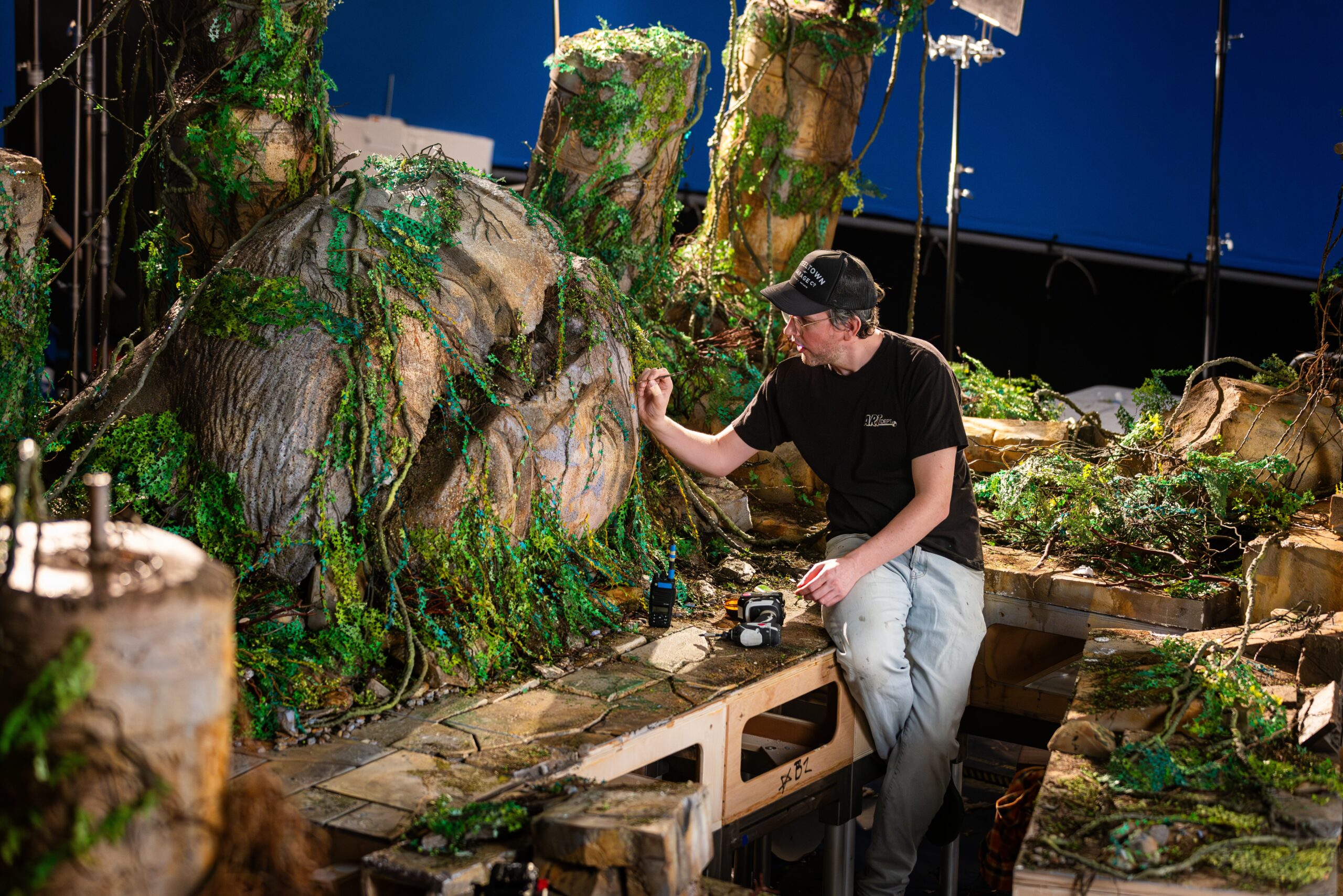
Travis Knight’s “Wildwood,” the latest stop-motion film from the Portland studio Laika, foTravis Knight’s “Wildwood,” the latest stop-motion film from Portland studio Laika (formerly Will Vinton Studios), is, in many ways, the culmination of his career in the form. Adapting the novel of the same name by Colin Meloy and Carson Ellis, it takes us into the vast woods outside Portland as the young Prue McKeel searches for her missing brother. She discovers a world of magical animals and a potential war she could soon find herself caught up in. While this story may sound more than a little familiar, seeing it brought to life through meticulous stop-motion animation by a dedicated team of artists who spent thousands of hours on it makes it something all its own. For Knight, son of Nike founder Phil Knight, who previously directed the stop-motion film “ Kubo and the Two Strings ” and the live-action films “ Bumblebee ” and “ Masters of the Universe ,” it’s been a project he’s pursued for more than a decade. It also reflects years of Laika artists exploring new stop-motion techniques, making it the studio’s most ambitious and expansive feature film to date. Knight spoke with RogerEbert.com about this long journey, the value of preserving stop-motion as an artistic endeavor in an increasingly automated world, seeing Portland become the center of the world when it comes to the form, the experience of working in live action vs. stop-motion, reckoning with the pains of the past while looking forward to the future, and more. This interview has been edited for clarity and length. Can you take a breath after all of this and soak in the moment? Or is it on to the next one for you? It’s a little column A, little column B. I have been working on this movie for a good long while. I literally finished the movie three weeks ago, which is crazy when you think about it, for something I’ve been working on for 16 years, we got that close to the wire of releasing it when we finished. Part of that, I think, is probably self-inflicted, just because this movie is so dear to me; it’s hard for me to let it go. I would say I’d never watched the film with a real audience until our premiere in London just a little over a week ago. I was a ball of stress and nerves. Every muscle in my back was just knotted up. Even though I love something, that doesn’t mean anyone else will, and I put everything I had into this movie without knowing how people would respond. It was incredibly gratifying, I have to say, to see people react to and connect with the material, because that is why we do what we do. We tell stories to connect with other people. So when something we’ve done has meant something to somebody else or has moved them or has made them feel something and/or made them reflect on an aspect of their own lives, it really is the greatest feeling, because that’s why. So I’m not really taking a breath, but I am breathing a sigh of relief that something I care dearly about has meant something to somebody else. Tucked away in an opening scene is an artist with a sign that says, “Enjoy handmade art before it’s gone forever,” which is funny but also relevant. When you think about these moments, I don’t know how many of these films you have in you, as they take a long time; where do you think the form itself stands now? Well, you’re right. These things take a lot out of you. There’s only so many of these things you can make. That sign is a funny visual gag; it goes by in a moment; it’s very Portland. As someone who lives in Portland, I see that kind of thing all the time. But I also think it’s true. I think that we see kind of how society is moving in one particular direction, where it’s increasingly frictionless, where things are designed to be faster and easier and more automated. If stop motion is anything, it’s the opposite. It’s slow, tedious, painful, and fundamentally human because it forces you to take your time. Each of these movies is an act of devotion and care over many, many years. That’s hard to do. It’s not something people take on easily. Not everyone sees the value in it, and yet I think it is deeply meaningful. So yeah, I do worry. These sorts of things are going to be extraordinarily disruptive to our world, to our society, to our industry. And yet I think that if enough of us push back and resist and say, “You know, there is value in the human touch,” then maybe we can stem the tide. And you’re building on a history in Portland, going back to Will Vinton Studios, to the point that it’s become now, in some ways, the stop-motion center of the world. Where do you see Laika going in the future? Do you think they’ll always be in Portland? Portland is where I was born and raised, and where our studio is. There’s no small amount of delight in seeing other productions set up shop in Portland and make their stop-motion movies here, as if the universe designed it. It’s not. It’s only because we’re there and because we’ve created a community there over the last twenty some odd years. But I think that’s wonderful because stop-motion is something that needs champions. Art is something that needs champions. It needs advocacy. I’ll keep doing it until I can’t anymore. This means a great deal to me. It’s my life’s work. I’ve devoted my entire career to this form of art, and I think it means something, which is why I do it. In terms of what’s next for us, we’ve got more stories to tell than I can even begin to explain to you. And the exciting thing for me is that they’re the types of stories that we’ve never even attempted before. They take animation into territories it’s never explored before. They challenge us as filmmakers, as artists, as storytellers. They will challenge the audience in ways we haven’t seen in the medium before. One of the things that gets me most excited is taking this art form, this medium I love, and pushing it forward, making it more than we’ve been told it can be. I think “Wildwood,” on some level, represents that. But looking ahead at what I hope we can achieve in the years to come, I think we’ll push it even further. As someone who has directed live action and then also stop-motion, where do you see your role in all of this? Because there are thousands and thousands of hours being put in by so many collaborators. I can say there are definitely parallels in how these processes work. There are many ways that working in stop-motion is similar to working in live action. And there are ways that they are not even remotely alike. I would say that on the performance side, stop-motion is like live action, but in slow motion. There is truth to that because, in stop-motion, you have a physical set, lights, a puppet, a camera, and a performance with a beginning and an end. Unlike other forms of animation, like CG or hand-drawn animation, those forms are iterative. So you can set key frames, you can do in-betweens, you can do your breakdowns, and you can go back and continue to refine over and over and over again until you get the exact performance that you want. With stop-motion, like live action, it has a beginning; you work your way through the performance, and then it has an end. And you can’t go back and change it. You are stuck with whatever this is. Whatever humanity, imperfections, and changes happen along the way, this is the performance, and it’s one of the things I love about it. It’s one of the things that makes it most difficult. But I also think it’s what makes it most human, because you are essentially watching an artist coax something to life with their hands, frame by frame. It’s what gives this form of filmmaking its humanity, and it’s what makes it special. So to whatever extent I have a part in keeping that alive, I’m very proud of that. This film feels, in some ways, like it’s about a younger generation reckoning with a world that, while built by adults who may have tried to create a better one for them, is also crumbling. I’m curious about how you felt making that as a parent, as someone who’s had your kids grow up with these films as well? Making a film and living a life for over 16 years teaches you many things. The world is certainly in a different place now than it was. I am, in many ways, a different man than I was 16 years ago. I’ve had a lot of experiences I couldn’t have anticipated, many joyful, many heartbreaking, and some I wish hadn’t happened. But if you’re a storyteller, if you’re an artist, if you’re a filmmaker, these are the types of things that you pour into your work. Oftentimes I get slightly uncomfortable speaking openly about them because they make you feel vulnerable, but that’s what you do when you make these movies. You have a kind of a scrim between you and your own experiences because you’re looking, in this instance, at a puppet on a stylized set that was shot frame by frame. But what you’re seeing, those are people’s lives; those are people’s pain. Those are moments of joy, sorrow, and heartbreak on screen, brought to life authentically. And so that’s why, when we’ve gotten to the end of one of these experiences, and someone is connecting with a moment, and they’re moved by it, what they’re moved by isn’t the thing itself; it’s the humanity behind it. They’re moved by another person. When you connect with a story, you’re not connecting with the story; you’re connecting with the person who’s telling it. That’s what’s so beautiful about this form of filmmaking. We all bring our own perspectives, challenges, joys, pain, and sorrow to these experiences. If we can put them authentically into the stories, hopefully they’ll reach another person and make them feel slightly less alone. Those are the experiences I had as a kid, the things I connected with, and the things that really stuck with me. Our great hope is that we can do that for others. “Wildwood” opens in U.S. theaters Oct. 23, via Fathom Events.
This article is sourced from Roger Ebert. For the full story:
Read full article on Roger Ebert →