Seeking Truth: Tom Skerritt (1933-2026)
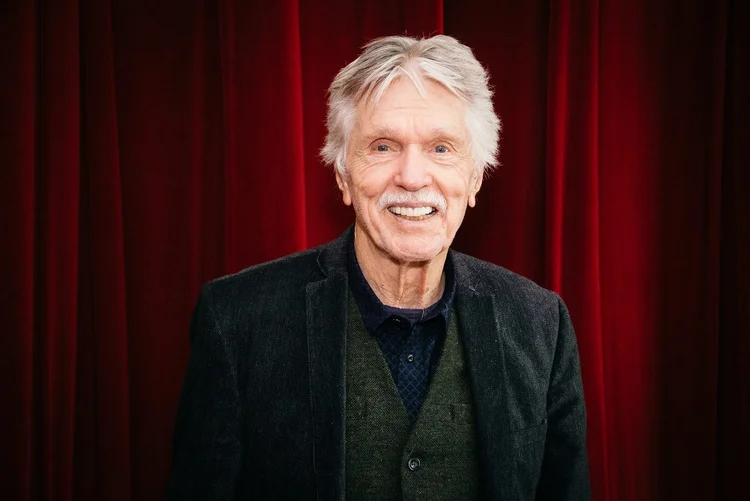
Like all great storytellers, Tom Skerritt was an observer. He loved to say he learned acting and filmmaking on the job, lucky enough to stand alongside masters like Robert Altman and Ridley Scott early in his career and absorb everything he could about the art of moviemaking. He loved telling stories about those early years, when he learned so much about his craft by watching. Many grizzled old men love to tell you about their glory days from the corner of a bar, but what made Skerritt special was how easily his intertwined interests in learning, storytelling, and observing showed up in his work. Great character actors, and Skerritt was a truly underrated one, study the human condition, taking in what they learn not just about filmmaking but the people that they meet, turning those habits, dreams, and personality quirks into art. Tom Skerritt rarely took on what one might call “quirky” roles. For many, he played father figures for as long as they can remember, and he often imbued those authoritative roles with gravitas. But he found that weight through very specific choices. There’s a certain type of world-weary performer—think Tom Waits, Harry Dean Stanton, or Sam Shepard—that people mistakenly assume is easy: crotchety old men playing variations on themselves. This is wildly untrue, especially for Skerritt. It’s not easy to imbue every part you play with specific history, but it felt true for Skerritt. His characters existed before the cameras started rolling, and, if they were lucky enough not to meet an alien, kept going when the credits rolled. That’s where the gravitas comes from: detailed choices made by someone who honestly loved both the form of acting and the people who made it possible. Born in Detroit, Thomas Skeritt served a four-year stint in the U.S. Air Force before heading to the University of California, where he caught the acting bug. His breakthrough wouldn’t come until 1970’s “M*A*S*H,” but by then he’d already been working for nearly a decade, appearing on huge ‘60s shows like “My Favorite Martian,” “The Fugitive,” “Gunsmoke,” and “Bonanza.” He would use the Altman comedy as a springboard to work with some of the pioneers of the era, including Hal Ashby (“Harold and Maude”), Herbert Ross (“The Turning Point”), and even a Roger Corman classic (“Big Bad Mama”), but the role for which he will always likely be most remembered is that of Captain Arthur Dallas in Ridley Scott’s “Alien.” The film is so strongly remembered for the work of Sigourney Weaver and the creature design that people often forget how essential the entire ensemble of “Alien” was to make it a classic. John Hurt, Yaphet Kotto, Ian Holm, Harry Dean Stanton, Veronica Cartwright, and Tom Skerritt filled out a cast that would change sci-fi/horror history by finding that aforementioned veracity. “Alien” is about working-class space travelers, and Skerritt grounds that aspect by letting his confident leadership give way to abject terror. He also smartly knew that he wasn’t the hero, never stealing focus with the kind of showy performance that wouldn’t have worked opposite Weaver. Like so many people on the Nostromo, Dallas is just trying to do his job, and Skerritt’s smart choices as an actor reflect that reality. Skerritt gave a few fun performances in the ‘80s, like “SpaceCamp” and “Steel Magnolias,” but his turn as CDR “Viper” Metcalf in “Top Gun” shot him back into the pop culture stratosphere. His most underrated run as a performer might be in the ‘90s, when he made “A River Runs Through It,” “Singles,” and “Contact” back-to-back. The big break between those last two came with “Picket Fences,” a huge CBS hit that won Skerritt an Emmy. He kept popping up on TV shows and helped carry the legacy of “Cheers,” “Roseanne,” “Will & Grace,” and “The West Wing.” Film roles became more sporadic in his old age, but he loved working into his eighties, including a memorable role in the excellent “Lucky,” his last great turn, and a fitting epitaph to his career. So many incredible people in that movie are gone now: Stanton, David Lynch, and Skerritt. But the work remains. Watch the clip below and experience these two lost legends finding so much truth in such a simple interaction. In the film, Stanton’s Lucky says, “The truth of the universe is waiting.” Tom Skerritt didn’t wait; he found that truth in everything he did.
This article is sourced from Roger Ebert. For the full story:
Read full article on Roger Ebert →