Change the Conversation: When Movies Talked About Mental Health
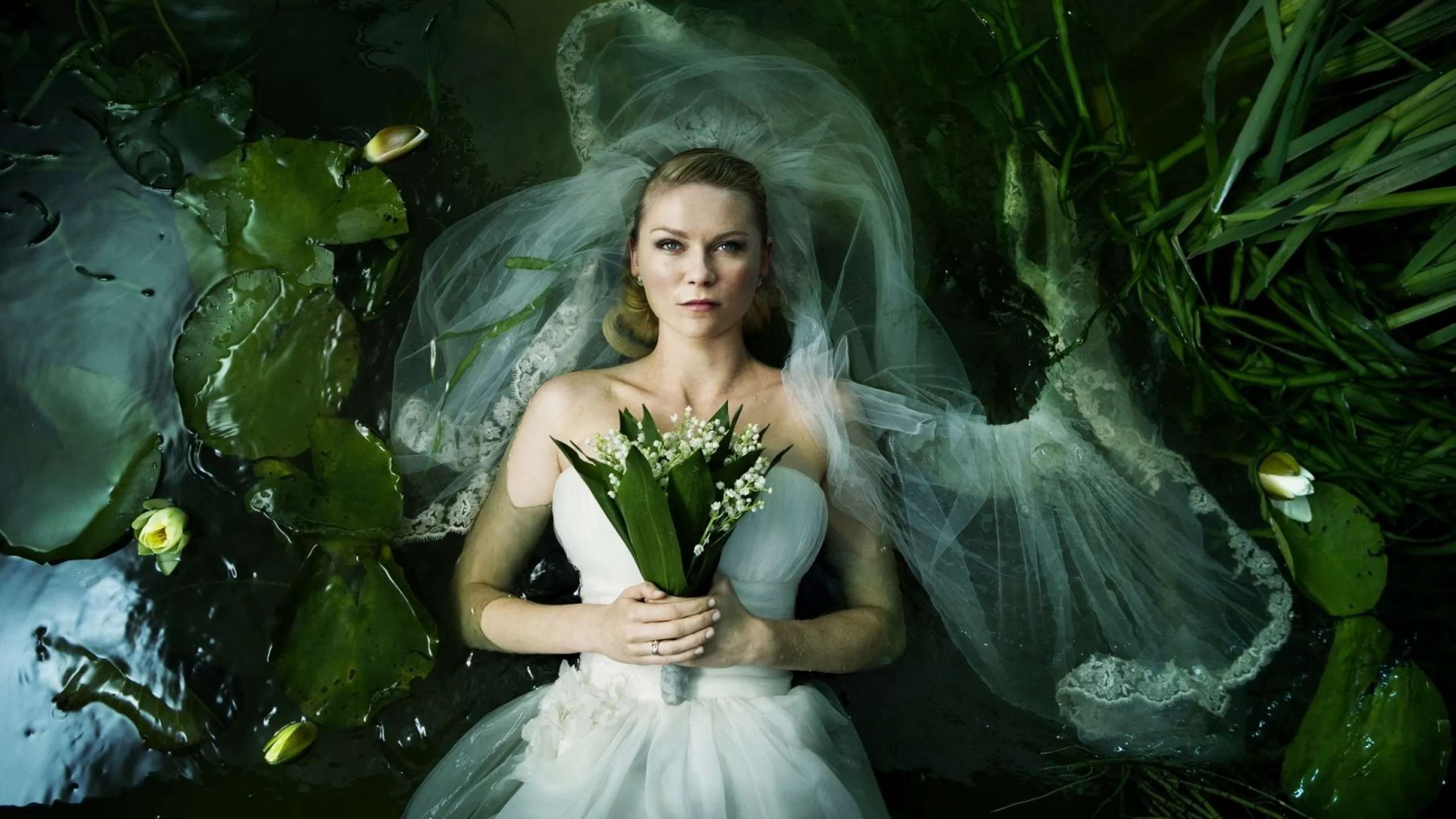
October 10 th was Mental Health Awareness Day, which got us thinking about how the issue has been presented in filmmaking over the years. From the direct commentary in projects like “ A Beautiful Mind ” and “ One Flew Over the Cuckoo’s Nest ” to more subtle allegories about the impact of issues with mental health, it has been a rich theme for screenwriters to explore. We asked some of our regular writers to pick a movie that they think highlights mental health in an interesting way, presented below, along with where to watch these films. “ Melancholia ” What makes Lars Von Trier’s “Melancholia” so remarkably acute in its observation of depression is that each character exhibits cruelty, denial, or obliviousness to the visibly depressed protagonist, mirroring society’s treatment of the mentally ill. At her wedding, a clearly unwell Justine (Kirsten Dunst in a landmark performance) is told, by her own loved ones who seem not to know her, that she is lying when she says she is happy, that she must conceal her depression from her new husband, that she has to be happy or else the vast expense of the wedding is a waste, that she needs to stop dreaming and get out, and that she has to work during her own reception. The film contains visceral depictions of the physiological impact of depression: previously beloved foods taste “like ashes,” Justine cannot summon the physical energy to even step into a bath. “I’m trudging through grey, woolly yarn,” she mumbles during her wedding, “It’s clinging to my legs.” “No, you’re not,” snaps her sister Claire (Charlotte Gainsbourg). But the tables turn thereafter, a sci-fi storyline creating a new mental health metaphor. Observing the sky, Claire’s astronomy enthusiast husband Jack (Kiefer Sutherland) proclaims that the star “Melancholia is going to pass right in front of [Earth],” posing no harm to human life. All along, by waving away depression, Claire and Jack, wealthy and cocooned, thought themselves safe. They were eye-rolling witnesses to Justine’s difficulties, but nothing more. Now, as Melancholia barrels toward a head-on collision with Earth, it is Justine who is bathed, eating, calm, while Jack commits suicide and Claire goes mad. Amidst this chaos, Justine builds a cave of branches with her nephew Leo (the film also holds that children, animals, and the mentally ill are the only ones who can be relied upon in an emergency), and asks Claire and Leo to join her as they embrace death together. When you ignore depression, when you suppress it, neglect it, the only person prepared for annihilation is she in whom annihilation has long resided. – Nandini Balial Available on Peacock . “ Fearless ” Trauma is a hell of a thing; it can cripple you, trap you inside it, make you believe you’re less of a person than you were before. But Peter Weir’s woefully forgotten 1993 film “Fearless” imagines a world where surviving a near-death experience might do the opposite: Make you radically appreciative of your life. Jeff Bridges quietly turns in one of his most remarkable performances as Max Klein, an ordinary man who walks away from a catastrophic plane crash without a scratch. Unlike his traumatized fellow survivors, Klein becomes placid, almost serene; he comes to believe his survival has made him invincible, and he engages with the world with a new lease on life. Is he reborn? Does he have superpowers? Or, as the airline’s psychiatrist, Dr. Perlman (John Turturro), believes, his trauma has manifested in a God complex? If “Fearless” concerned itself solely with Bridges wandering angelically, a la “Starman,” through the mundane wonders of the human world, it would feel limiting. But Klein’s angelic nature is contrasted by his fellow survivor, Carla (an Oscar-nominated Rosie Perez, incredible here), who has retreated into herself post-crash in grief over her young child dying. It’s a study in the extremes of post-traumatic stress, as two people decide, respectively, to embrace and retreat from life in the wake of a devastating experience. It’s a film that reckons earnestly with the big questions that surround our human experience: How do we live knowing our lives and bodies are so fragile? That something as simple as a strawberry or as big as an airplane could end it in a moment? And once we’ve walked through those experiences, how do we find ourselves again? Or reckon with the new people those experiences have made us? “Fearless” tackles these questions with astonishing horror and sublime clarity. – Clint Worthington Available on VOD . “ Mysterious Skin ” Gregg Araki’s filmography is full of films that focus on troubled characters, but nothing compares to his 2004 adaptation of Scott Heim’s novel Mysterious Skin . The film centers on two young men in the years following their sexual abuse at the hands of their little league coach and tracks them as they continue to grapple with the effects of their shared trauma. Now grown men, Neil (Joseph Gordon-Levitt) works as a sex worker, and Brian (Brady Corbet) has become obsessed with the idea that he was abducted and experimented on by aliens as a child. Araki’s camera never shies away from the harsh realities of the abuse Neil and Brian were subjected to as children, and the isolation they continue to suffer from in adulthood. Instead, he peels back the invisible veil between the camera and the audience, forcing us to watch as their lives are continuously undone, remade, and then undone once again. The realities of sexual abuse ring through each sequence in the film, shaping both Neil and Brian into imperfect victims whose respective recklessness and naivety have been woven into their very beings. Despite their differences, both characters move through adulthood in a dissociative and self destructive state, further entangling themselves in their suspended childhoods as they knowingly and unknowingly reenact their abuse. Here, Araki bravely confronts not only the realities of childhood sexual abuse, but how the psyches of survivors become irrevocably altered in the days, months and years post-trauma. – Kaiya Shunyata Available on VOD . “ Witches ” With her deeply personal documentary “Witches,” filmmaker Elizabeth Sankey explores the history of female madness–in real life, and on screen–as a lens through which to explore her own experience with postpartum depression. Through its hybrid structure, which is part filmic essay, part interviews with other women who have experienced postpartum depression or psychosis, Sankey seeks to find links between the history of witch hunts and women’s mental health (in this way, it is a modern companion piece to Benjamin Christensen’s excellent silent documentary “Häxan,” which also linked female hysteria with medieval accusations of witchcraft). In researching the film, Sankey examined hundreds of historical “confessions” (mostly coerced) from women who had been accused of witchcraft, which she then contrasts with depictions of witches and other “mad” women in cinema. Her deft use of film clips, which includes moments from films as diverse as “The Passion of Joan of Arc” (1928), “The Devils” (1971), “Girl, Interrupted” (1999), and “Kindred” (2020), perfectly underscores her thesis, crafting a film on a subject that still feels taboo today: female madness and mental health. As she speaks with other women who have gone through postpartum depression and their experiences with healthcare in the U.K., the film shines a light on the way in which understanding of the complexities of women’s overall health is still neglected in the medical field, and how, over the centuries, the traditional medical and medicinal knowledge of women healers has been lost due the persecution of these women and the privatization of medicine. All of this makes “Witches” an essential doc in an era where the death by suicide of new moms is increasing and the mortality rates of mothers in general is rising because of both neglect and harmful laws (especially in the U.S.). For more films on these “taboo” subjects, I recommend “Tully” (2017), “Aftershock” (2022), “Nightbitch” (2024), and “If I Had Legs I’d Kick You” (2025). – Marya E. Gates Available on MUBI. “ Iron Man 3 ” The first thing Robert Downey Jr.’s Tony Stark tells us in “Iron Man 3” is: “A famous man once said, ‘We create our own demons.’ ” Set aside the silliness of “The Mandarin” character and the core conflict involving Guy Pearce’s mid-level villain. What makes this film special is the honest depiction of Tony Stark’s mental health journey, with Robert Downey Jr. giving one of the most deeply layered, raw and effective performances ever seen in a superhero film. Tony has been severely traumatized by the Battle of New York. He is neglecting his relationship with Gwyneth Paltrow’s Pepper, and is obsessively building dozens of protective, specialized Iron Man suits. When a little girl named Erin asks him to autograph a drawing of himself, he writes, “ERIN, HELP ME.” To a little girl. My favorite sequences in the film are the quiet and telling intense moments when Tony bonds with Harley, who is essentially a child version of Tony: a smart, isolated, tech-obsessed kid with father issues. We watch with empathy as Tony experiences severe anxiety attacks, and we’re greatly invested in him as he returns to his roots as a mechanic-creator, and ultimately, bravely sheds his protective layers by blowing up those super-suits and having the shrapnel removed from his chest so he no longer needs the arc reactor to stay alive. Tony is not “cured” of all his demons, but he has taken important steps to understand his issues and better cope with them. It’s a beautiful thing to watch. – Richard Roeper Available on Disney+ . “ Metallica: Some Kind of Monster ” I had quite the visceral reaction when I saw “Metallica: Some Kind of Monster” 22 years ago. There was something very jarring about watching one of the biggest metal acts of all time having to go to therapy because they literally couldn’t get their act together. It’s still jarring seeing guitarist/frontman James Hetfield and drummer Lars Ulrich get into squirm-inducing, microaggression-filled snits over control of the band, eventually having to work out their differences in group sessions with longtime producer Bob Rock and therapist/performance coach Phil Towle. (Lead guitarist Kirk Hammett is quietly stuck in the middle, basically the co-dependent child between this dysfunctional couple.) True-crime documentarians Joe Berlinger and Bruce Sinofsky (“Brother’s Keeper”) caught the then-middle-aged group at one helluva low point, attempting to make their 2003 album St. Anger amidst some much-publicized obstacles (Hetfield’s trip to rehab, bassist Jason Newsted’s departure, Ulrich’s feud with Napster). For two hours and 21 minutes, they capture all the tense, uncomfortable, passive-aggressive moments that surface on their journey to properly rock-and-roll again. They’re at their most brotherly when they raunchily joke around on the mike while doing lame radio-contest promos. (Nothing brings a rock band together more than corporate disdain.) For all its cringey-but-revealing messiness, “Metallica: Some Kind of Monster” shows how even the guys who made Master of Puppets had to grow the hell up, seek some professional help, and learn how to talk that shit out! – Craig D. Lindsey Available on VOD . “ The Hours ” If you ask most people nowadays about the movie “The Hours”, what they probably remember is Nicole Kidman’s fake nose. But if all you know about this award-winning adaptation of Michael Cunningham’s Pulitzer Prize-winning novel is that a frumped-up Kidman won an Academy Award for playing the famously homely author Virginia Woolf while wearing facial prosthetics, it’s time to give this 2002 film another look. A delicate, emotionally harrowing exploration of depression, longing, grief, and isolation, “The Hours” is a mental health movie that’s mostly about its main characters pretending to be fine. Until they realize they aren’t. Told across three timelines and 75 years, its triptych of stories follows three different women whose lives are connected in ways both literal and thematic by the book Mrs. Dalloway . Like Woolf’s novel, the stories of author Virginia (Kidman), 1950s housewife Laura (Julianne Moore), and 2000s party planner Clarissa (Meryl Streep) each unfold over a single day, a specific moment of crisis that forces each to face uncomfortable truths about themselves and the ways they have each repeatedly sacrificed their own happiness for the sake of others’ comfort. It is a story that contains multiple darkly bleak moments—the film includes two suicides and references to several unsuccessful attempts—it also includes genuine catharsis. To look life in the face and love it for what it is, as Virginia urges in the voice-over that closes the film, is to accept it for all its beauty and difficulty; to claim happiness in the fleeting hours in which it occurs. That is resilience and, in its way, a kind of triumph. (Pack tissues anyway, though.) – Lacy Baugher Available on MGM+ . “ Mommy ” At a stoplight, with her teen son, Steve (Antoine Olivier Pilon), buckled beside her, Diane (Anne Dorval) is lost in a phantasmagoric daydream. Set to “Experience” by Ludovico Einaudi, she envisions him graduating, falling in love, getting married, and living The Good Life. Bathed in amber hues, we watch this proposed future unfold with the knowledge that it’s all in her head. Even still, the cut back to a green light at a dreary Quebec intersection is no less heartbreaking. Xavier Dolan’s “Mommy” centers the relationship between widowed single mom Diane, son Steve, and Kyla (Suzanne Clement), a new neighbor and friend, as the trio navigate his volatile and sometimes violent struggle with mental health. The first time I watched this film was in 2019, and it tore me open to see my realities of loving and living with someone who is profoundly jarred by their own mind reflected back at me. I resonated with Kyla and Diane, their fears, hopes, desperation, overwhelm, and love. Years later, I found myself in the shoes of Steve, fighting an amorphous war as both victim and perpetrator, writhing dumbfounded in the ether trying for a breath that never felt deep enough. There is no perfect way to support someone in this kind of fight. The invisibility of the rotten roots of mental health struggle make for a guessing game that takes time, and above all, trial and error. It is a painful fact, one made more nagging by the desperation (born of love) to do it right and sometimes, the necessity to do it quickly. “Mommy” dissects this dynamic from both sides, as caregiver and the cared, and also as a symbiotic unit of fracture and support. Dolan’s film seizes the head, heart, and gut with acute empathy and hope and extraordinarily vulnerable performances. A vivid, visceral portrait of the ephemeral quality of a life lived in pursuit of quelling a certain, too-familiar pain, “Mommy” is about what we are, what we can be, and how to get there for not only each other, but ourselves. – Peyton Robinson Available on Tubi. “Now, Voyager” Since the beginning, movies have most often ranged from ignorant to offensive in reductionism and othering of characters with mental illness. The earliest films caricatured them for comedy or horror. Thomas Edison’s 1904 “The Manic Chase,” had an escaped “lunatic” wearing a Napoleon hat. German film characters were deranged (“The Cabinet of Dr. Caligari”) or serial killers (“M”). In the US, members of the show business community were among the first to become interested in Freudian psychoanalysis, inspiring movies like “Lady in the Dark” and the trope of a single childhood trauma leading to severe mental illness (“Spellbound,” “The Three Faces of Eve”). The 1942 film “Now Voyager” is most often thought of as a bittersweet romance. But it is remarkable for its nuanced, sensitive, and insightful portrayal of what was then called a nervous breakdown. Bette Davis gives one of her best performances as Charlotte, the unhappy youngest daughter of a wealthy Boston family. Repressed, ignored, and insecure, she finally erupts in anger and self-loathing. Claude Rains plays the sympathetic therapist who gains her confidence when he reassures Charlotte that he does not intend to pry or expose her. Significantly, the movie shows us that what is really healing for Charlotte is not talking about the past but allowing herself to be loved and finding purpose in helping others. Still very rare today, this movie portrays mental illness not as a monster that must be vanquished or a problem to be solved but a soul to be nourished. – Nell Minow Available on YouTube TV & Tubi. “ Inside Out ” Red, yellow, blue—or for the color theory nerds—cyan, magenta, yellow. In the outside world, those are primary colors, Able to stand alone or be mixed into a full spectrum. In the inner world of “Inside Out,” they are Sadness, Anger, and Joy. Like their colorful namesakes, they combine in shades of Fear, Disgust, Envy, Embarrassment, Anxiety, and beyond, forming a full emotional spectrum. But in a healthy mind, they cannot stand alone. That’s what “Inside Out” taught us when it turned theater seats into therapy couches in 2015. This gift from Disney/Pixar is peak cinematic craft, from animation to voice acting to writing and design. Yet its insights are more than entertainment. To tackle a problem, we need to talk about it without deflecting, shame, or blame. “Inside Out” gave us a gentler language to talk about mental health within a society that demands we “put on a happy face.” Joy embodied avoidance, trying to fix every problem with happiness. Sadness brought balance, revealing that the goal isn’t to stifle emotions but to feel to heal. Prior films like “A Beautiful Mind” showed adults the struggle and stigma of mental illness. “Inside Out” is for families, opening up conversations about mental health and, through that, mental illness—inspiring understanding and compassion. Now we see that we’re all swirling balls of emotional color. The urgency is to savor the bittersweet without being imprisoned by stifling our inner prisms. “Inside Out” taught us that. Some movies change the game; others change the conversation. – Sherin Nicole Available on Disney+. “ Dark Water ” In Walter Salles-directed “Dark Water,” Jennifer Connelly’s Dahlia surrounds her daughter and herself in muted softness. Dahlia is newly separated from a mentally abusive husband and moves into a decaying building on Roosevelt Island with Ceci (Ariel Gade), her six-year-old daughter. The bedroom ceiling in their new apartment won’t stop leaking and we soon learn that the ghost of a girl Ceci’s age, named Natasha (Perla Haney-Jardine), was abandoned in the apartment right above Dahlia and Ceci’s. Seeing the sweet relationship mother and daughter share, Natasha’s spirit moves through the water to be closer to Dahlia, to take Ceci’s place. Fleecy blankets, downy corduroy coats and dresses, and a plush couch that welcomes them like a hug when their bedroom becomes antagonistic: the softness Dahlia meticulously arranges around Ceci. And so, as Dahlia’s world and the terrain of her mind in response, even her apartment that ought to be safe but isn’t, are often harassing places, the fabrics at least offer tenderness. The softness persists despite the corrosive horrors, the mildew and dank, in the way that Dahlia’s love persists despite her deep, abiding sadness, which sparked in childhood—Dahlia’s mother and father were negligent and abusive. And so, watching Dahlia with Ceci, I feel the aching yearning that Natasha feels, that runs the water time and again through the plaster of Dahlia’s ceiling. Dahlia is a good mother, she is loving and attentive, and like the hug of the corduroy couch, she wraps herself around Ceci, nuzzling her nose in the small child’s neck, leaving no space for any badness to get through her and to Ceci. Dahia’s soft embrace, her warm love, protects the child against the cold harshness of the brutalist building, and against Ceci’s father’s cruel words. And as the film ends on one final embrace between mother and child, I weep because “Dark Water,” unlike any other film, heartbreakingly illustrates how hard a sad person works to maintain the possibility of love in the face of a brutal world. – Alisha Mughal Available on VOD. “ Blue Heron ” Director Sophy Romvari’s tenderly fragmented “Blue Heron” is a film that nestles its most heartbreaking moments at precipices, those moments where the future feels so undefined and the present so tangible, where clinging to hope feels foolish as much as it feels like the only thing you can do. It is gut-wrenching in its portrayal of mental health struggles because Romvari, drawing from her own family history, understands that certain mental battles are eternal, that their origins are as unknowable and undefined as any sort of “resolution.” The film forces us to sit with that painful mystery, as it focuses on a young girl, Sasha (Eylul Guven), as her family moves from Hungary to Canada’s Vancouver Island. Their fresh start is complicated by the increasingly erratic and dangerous behavior of the eldest sibling, Jeremy (Edik Beddoes), who wrestles with an unspecified mental illness. Tactfully and thoughtfully, Romvari’s lens towards Jeremy is one of compassion. We see a family trying to unsuccessfully shield itself from emotional volatility, feeling caught between the feeling of powerlessness in the face of Jeremy’s severe struggles and also numbing themselves to the bone in search of “solutions.” Critically, Jeremy’s destructive outbursts are not spectacles to gaze at but invitations to empathy. We see things obfuscated, the way a child may see the parts of a conflict but not the whole picture. You can feel Romvari is trying her best to capture not just what happened back then but how it felt, what it was like to be so close to three-dimensional devastation, but as a child, she only sees its contours. “Blue Heron” understands that we can’t be prophets to our younger selves, just historians documenting our unresolved pain, cartographers trying to chart a discernible path out of our incomprehensible, inner landscapes. – Zachary Lee Available on The Criterion Channel.
This article is sourced from Roger Ebert. For the full story:
Read full article on Roger Ebert →