Carrie’s Matthew Lillard: The Biggest Lesson from Modern Teachers Is It’s ‘Never the Kid, It’s the Adults’
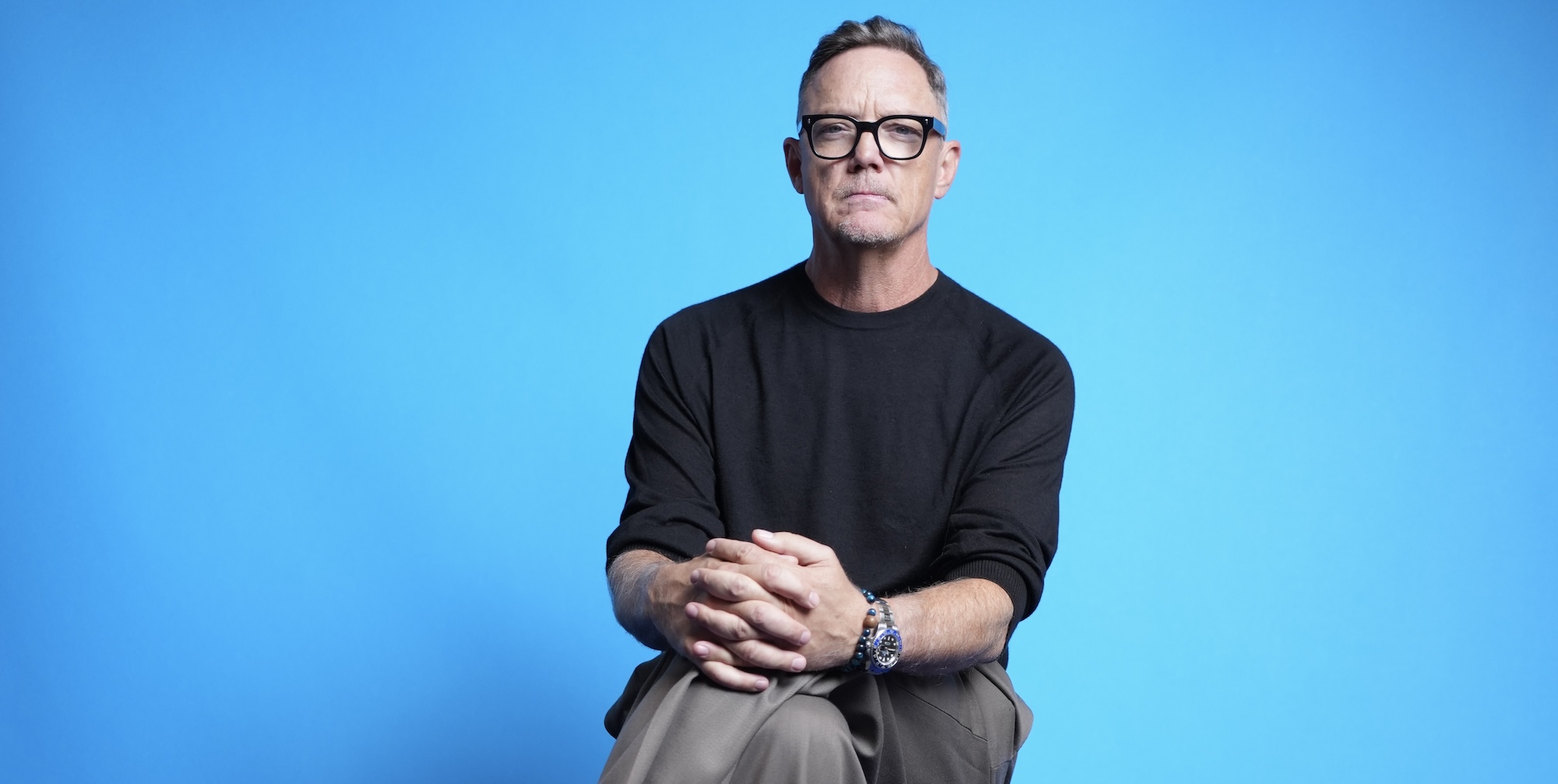
Matthew Lillard is deeply proud of his children. Obviously aware of the irony that he was once most famous for playing young people discovering their identities or beginning their lives in high school and college, and is now the “elder statesman” on sets like Mike Flanagan ’s Carrie , Lillard remains acutely observant of the growing-up experience—especially in his own home with three children between the ages of 18 and 24. It’s why he suspects so many parents and adults are deluding themselves these days if they think the kids are as happy and as assured in the world around them as he was when he starred in movies like Scream and Hackers . “I will say my kids suffer from anxiety,” Lillard acknowledges when stopping by the Den of Geek studio. “In any public situation, they’re constantly on look-out. They’ll go to a movie and look for the exits. I think they live in a level of fear that we as adults can never understand.” They’re worried about an archetype that was once largely relegated to the realm of fantasy when Lillard grew up with VHS tapes of Brian De Palma and Sissy Spacek’s take on Carrie (1976) , a classic film about a bullied and isolated child withering beneath an abusive mother until she one day snaps. But in 1976, or when author Stephen King first published the story in 1974, the ‘snap’ involved magical telekinetic powers—not weapons of mass murder. That last modernly ubiquitous detail is something Lillard and Flanagan’s new and thoroughly reimagined adaptation of Carrie , now streaming on Amazon Prime Video, confronts head on in the first episode when Carrie (an initially warm and bubbly Summer H. Hall) sees for the first time a reality that might shock even many viewers: public school drills where a man holding a fake (but extremely real looking) assault rifle pretends to be a killer walking from classroom to classroom. “My kids are really bright, they’re really articulate, but that feeling, this level of anxiety, is more prevalent than any adult really understands,” Lillard continues. “Do I think [these drills] are necessary? Unfortunately, I do. Apparently in America we think it’s more important to have assault weapons that are designed to murder human beings than we care about our kids and their safety.” Such is the provocative new reality explored in Carrie , a series that attempts to reimagine the story of Carrie White, the lonely telekinetic ‘firestarter’ girl, from all angles, including the home lives of her greatest tormentors and those of even her put-upon champions, like Lillard’s Principal Grayle. “Grayle is the one who is the calm in the storm,” Lillard says. “It’s interesting for me, especially in a genre film, I’m usually out there chewing the scenery and hurling energy around, but Mike had a very clear plan of what he wanted me to do. It’s a real adult role… it’s grounded in strength, in simplicity of performance.” It is also at the intersection Flanagan wants to explore in Carrie ’26, a TV series as much based on the real-world phenomenon of anonymous social media bullying crippling an entire community in California as it is Stephen King. In this way, we spend nearly as much time studying the troubled home life of Carrie’s chief bully, Chris Hargensen (Alison Thornton), as we do Carrie’s own complicated and toxic relationship with her zealous and militantly religious mother, Margaret (Samantha Sloyan). According to Lillard, this ultimately reflects the greatest lesson he learned from working with real-life educators in the current trenches: it’s never the kid’s fault. Says the actor, “Personally, I think we are losing the plot in terms of educators and their role in our society and their importance in helping raise kids and educate kids… I did have a great conversation with a teacher who is a dear friend of Mike’s, and we spoke for like an hour. She said a bunch of things that end up in the show, but one of the first things she said, first and foremost, is it’s never the kid; it’s always the adults. Every kid who comes to that school, if they’re a bad egg, it’s because their parent is a bad egg. Kids by nature are just trying their best.” This is something the modern Carrie attempts to dramatize. While Chris is never excused or exonerated for her actions—she indeed embraces them every time in the series, from creating the “#CarrieRed” Instagram account to filling a fateful bucket with pig’s blood—we do see how she learns her behavior from an aggressive and otherwise negligent father more preoccupied with his dwindling fortunes than his daughter’s health, and a wholly absent and disengaged mother living with another family. While Lillard’s Principal Grayle doesn’t have the full details of that situation, there is a knowing weariness when he sits across the desk from Chris’ litigious father. “The other thing that [Flanagan’s friend] really tried to highlight for me is that teachers can do anything,” adds Lillard. “They’re all well-educated, they’ve all gone to college, they could all go into the private sector and make more money but they choose, by choice, to raise the next generation of young people. There is an element of love that brings them into that profession in the first place, and I do think Mike tries to capture that. This authentic, empathetic, and loving relationship with these kids, trying to do the best they can given the circumstances they’re working under.” It’s a complexity, and anxiety, we tend to ignore. Carrie is now streaming on Amazon Prime Video. The post Carrie’s Matthew Lillard: The Biggest Lesson from Modern Teachers Is It’s ‘Never the Kid, It’s the Adults’ appeared first on Den of Geek .
This article is sourced from Den of Geek. For the full story:
Read full article on Den of Geek →